IBN News Home

Category

Business & Markets

42 articles

The Bias Machine: How AI Recruiting Tools Are Encoding Discrimination at Scale

The Bias Machine: How AI Recruiting Tools Are Encoding Discrimination at Scale

Artificial intelligence tools marketed as antidotes to human bias in hiring are increasingly demonstrating the opposite effect — systematically disadvantaging applicants based on race, gender, age, and socioeconomic background, often in ways that are more difficult to detect and challenge than the discrimination they were designed to replace. As adoption accelerates across American industry, the question of who is accountable when an algorithm discriminates remains largely unanswered.

Hiring Theater: The Job Posting That Was Never Meant for You

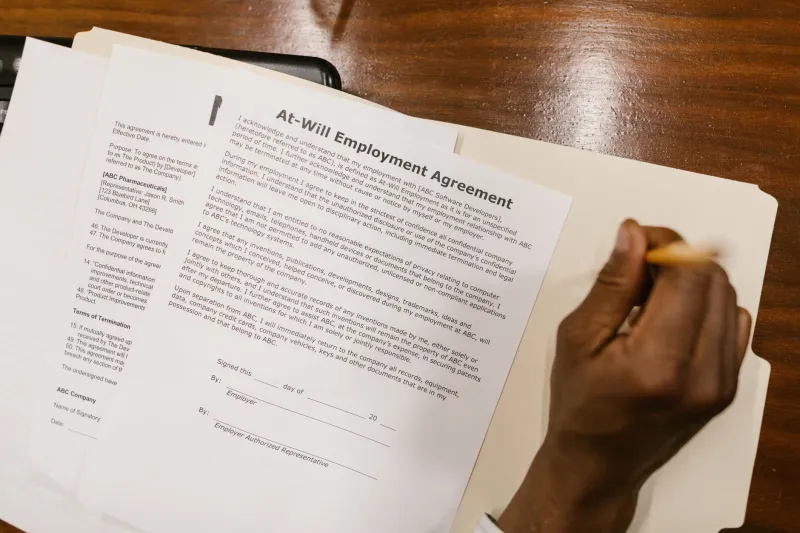
Hiring Theater: The Job Posting That Was Never Meant for You

Millions of Americans apply to jobs each year that were never genuinely available to them. A growing body of evidence suggests that a significant share of corporate job postings function as regulatory compliance exercises, internal optics management, or quiet confirmations of decisions already made — leaving outside applicants to absorb the cost of a process rigged from the start.

Signed Away: How Non-Compete Clauses Became a Tool for Trapping Ordinary Workers

Signed Away: How Non-Compete Clauses Became a Tool for Trapping Ordinary Workers

Once confined to boardrooms and executive contracts, non-compete agreements have quietly migrated down the corporate ladder, binding sandwich makers, hair stylists, and warehouse workers to the same restrictions once reserved for C-suite executives. The consequences for workers caught in these arrangements are severe — and the legal landscape surrounding them is shifting fast.

Every Click, Every Pause: The Expanding World of Workplace Monitoring and What It Costs Workers

Every Click, Every Pause: The Expanding World of Workplace Monitoring and What It Costs Workers

Employers across the United States are deploying an increasingly sophisticated array of monitoring tools that track far more than whether employees are at their desks. From AI systems that analyze tone in written communications to software that measures bathroom break durations, the modern workplace has become one of the most comprehensively surveilled environments in American life — and most workers have no idea how much data is being collected about them.

Expertise, Erased: The Corporate Decisions That Are Quietly Hollowing Out American Industry

Expertise, Erased: The Corporate Decisions That Are Quietly Hollowing Out American Industry

Across manufacturing floors, hospital systems, technology firms, and financial institutions, a pattern has emerged that economists and organizational researchers describe as one of the most consequential and least examined threats to American competitiveness: the systematic destruction of accumulated expertise through layoffs, consolidations, and restructurings that treat human knowledge as a line-item cost rather than a strategic asset. IBN News investigates what is lost, why it cannot be easil

When Your Best People Walk Out the Door and Into a Competitor's Office

When Your Best People Walk Out the Door and Into a Competitor's Office

Companies that lose high-performing employees to rivals rarely account for the full financial damage until it is far too late. Beyond recruiting fees and onboarding delays lies a far more dangerous deficit: the transfer of institutional knowledge, competitive intelligence, and innovation capacity directly into the hands of the competition. An IBN News investigation examines why employee departures are not isolated HR events but compounding strategic vulnerabilities.

The Specialist's Dilemma: How Deep Expertise Became a Negotiating Liability in American Labor Markets

The Specialist's Dilemma: How Deep Expertise Became a Negotiating Liability in American Labor Markets

Across American industries, a counterintuitive and largely undiscussed phenomenon is suppressing wages for some of the most qualified workers in the labor market. Professionals who have spent years—sometimes decades—developing rare and specialized knowledge are discovering that their expertise, far from commanding a premium, is being used against them in salary negotiations. The mechanisms are structural, the consequences are significant, and the workers most affected are often the least equippe

Fired, Forgotten, Then Recruited Back for Less: The Corporate Rehiring Playbook Nobody Talks About

Fired, Forgotten, Then Recruited Back for Less: The Corporate Rehiring Playbook Nobody Talks About

A growing number of American companies are quietly reaching out to former employees they once terminated, dangling the promise of a fresh start—while offering compensation well below what those workers previously earned. This pattern, which workforce analysts are beginning to document with increasing alarm, exposes a fundamental tension between the talent shortage narrative that dominates corporate communications and the actual value companies assign to experienced returning workers. What looks

Pay to Stay Employable: The Booming Credential Industry That Turned Worker Anxiety Into a Business Model

Pay to Stay Employable: The Booming Credential Industry That Turned Worker Anxiety Into a Business Model

A sprawling ecosystem of certifications, bootcamps, and professional credentials has grown into a $50 billion industry sustained largely by workers paying out of pocket to meet shifting employer expectations. While companies demand ever-longer lists of qualifications, most refuse to fund the training required to obtain them. The result is a perpetual treadmill that enriches credential providers while transferring the cost of talent development entirely onto the workforce.

The Invisible Ladder: How the Death of Formal Mentorship Created a Two-Tier Workforce

The Invisible Ladder: How the Death of Formal Mentorship Created a Two-Tier Workforce

Across corporate America, structured mentorship programs have quietly disappeared, replaced by informal networks that reward proximity to power over demonstrated ability. The collapse of institutional knowledge transfer has produced a workforce divided between those who happen to know the right people and those left to navigate complex organizations without guidance. The consequences—for career mobility, organizational performance, and economic equity—are only beginning to be understood.

Too Late, Too Little: The Psychology and Economics Behind Corporate Counteroffers That Almost Never Work

Too Late, Too Little: The Psychology and Economics Behind Corporate Counteroffers That Almost Never Work

When an employee submits a resignation, a predictable corporate ritual often follows: the sudden discovery of budget that did not exist during the last salary review, the urgent conversation with HR, the counteroffer that arrives precisely when it is least likely to matter. IBN News examines why companies deploy last-minute compensation to retain departing talent, what these maneuvers reveal about the underlying state of the employment relationship, and why the data consistently shows that most

The Wealth Requirement Nobody Mentions: How Unpaid Internships Filter Out the Working Class Before Hiring Even Begins

The Wealth Requirement Nobody Mentions: How Unpaid Internships Filter Out the Working Class Before Hiring Even Begins

Across finance, media, fashion, and politics, unpaid internships have quietly become the standard first step toward a professional career—a step that millions of Americans cannot afford to take. The economic math behind these arrangements reveals a system that rewards family wealth over talent, while companies simultaneously proclaim their commitment to diverse pipelines. IBN News examines how the internship economy became one of corporate America's most durable and least-discussed gatekeeping m

Disruptors Unwanted: Why Corporate America Keeps Rejecting the Talent It Claims to Covet

Disruptors Unwanted: Why Corporate America Keeps Rejecting the Talent It Claims to Covet

Companies routinely advertise for candidates who can 'think like entrepreneurs' and 'challenge the status quo,' yet recruiters are increasingly filtering out the very professionals who have lived those experiences. IBN News examines the deepening contradiction between corporate innovation rhetoric and the hiring practices that quietly exclude startup veterans from consideration.

Rigged by Design: The Hidden Architecture of Corporate Performance Reviews

Rigged by Design: The Hidden Architecture of Corporate Performance Reviews

Inside many of America's largest corporations, performance review systems are not built to measure employee output—they are built to rationalize compensation decisions that executives have already made. IBN News spoke with HR insiders, data scientists, and workers who have witnessed the machinery firsthand, revealing a process that manufactures the appearance of objectivity while delivering predetermined outcomes.

Pushed Out the Door: How Corporations Engineer Exits to Avoid Paying What They Owe

Pushed Out the Door: How Corporations Engineer Exits to Avoid Paying What They Owe

A growing number of American workers are discovering that their employers never intended to fire them — they intended to make staying impossible. Through a calculated combination of impossible performance targets, stripped responsibilities, and hostile management practices, corporations are systematically manufacturing resignations to sidestep severance obligations and unemployment eligibility.

The Founder's Burden: How Corporate America Penalizes Workers Who Bet on a Startup and Lost

The Founder's Burden: How Corporate America Penalizes Workers Who Bet on a Startup and Lost

Workers who left stable corporate careers to join startups that ultimately failed are discovering a troubling reality: the professional penalty for that risk can follow them for years. A closer look at corporate hiring practices reveals a systemic bias against startup veterans that raises serious questions about how American business values entrepreneurial risk-taking.

Guilty by Association: How Recruiters Punish Workers Who Left Sinking Ships Before the Flood

Guilty by Association: How Recruiters Punish Workers Who Left Sinking Ships Before the Flood

Workers who voluntarily exit struggling startups before mass layoffs often face a damaging paradox: the very foresight that protected their financial stability becomes a liability on their résumé. Hiring managers and automated screening tools frequently flag short tenures at failed ventures as red flags, regardless of the circumstances. IBN News examines the hidden double standard embedded in how corporate America evaluates employment decisions made under duress.

Paid for Who You Might Become: The Corporate Compensation Trick Keeping Senior Workers Underpaid

Paid for Who You Might Become: The Corporate Compensation Trick Keeping Senior Workers Underpaid

Across corporate America, a quietly institutionalized practice is allowing companies to suppress compensation for experienced professionals by emphasizing speculative future growth over demonstrated, market-validated expertise. Internal compensation frameworks built around 'development potential' scores are increasingly being applied to senior hires in ways that depress starting salaries and widen pay gaps. For mid-career professionals, the cost of this system is neither theoretical nor small.

The Lateral Leap: How Switching Jobs Sideways Has Become the Fastest Path to Higher Pay

The Lateral Leap: How Switching Jobs Sideways Has Become the Fastest Path to Higher Pay

New compensation data reveals a striking paradox at the heart of American corporate culture: employees who move laterally between companies or departments frequently out-earn colleagues who pursue traditional promotions. Structural salary constraints and rigid budget cycles have quietly inverted the logic of loyalty, turning job-hopping from a résumé liability into a financial strategy.

Restructured Out of a Future: How Corporate Reorganizations Are Erasing the Roles That Once Built Leaders

Restructured Out of a Future: How Corporate Reorganizations Are Erasing the Roles That Once Built Leaders

Across American industry, corporate restructuring initiatives marketed as efficiency upgrades are quietly dismantling the middle-management positions that once served as the critical bridge between frontline work and executive leadership. For thousands of mid-career professionals, the organizational chart has been redrawn—and their futures have been erased along with it. An IBN News investigation examines the structural forces behind this shift and what it means for the next generation of Americ

Welcome Back, Take a Pay Cut: The Hidden Cost of Returning to a Former Employer

Welcome Back, Take a Pay Cut: The Hidden Cost of Returning to a Former Employer

Workers who leave a company and later return are increasingly discovering that loyalty—even delayed loyalty—carries a financial penalty. Salary data and firsthand accounts reveal a systemic pattern in which employers treat returning staff as strangers rather than proven assets, frequently offering compensation packages below what those employees earned at departure.

More Work, Same Pay: How Corporate America Quietly Redistributes Labor Without Rewarding It

More Work, Same Pay: How Corporate America Quietly Redistributes Labor Without Rewarding It

Across industries, a growing number of American workers are absorbing duties that once defined higher-paying roles—without receiving the compensation to match. Through salary data, internal HR documentation, and worker accounts, IBN News examines how systematic responsibility creep has become a normalized cost-cutting strategy, and what employees can do when their job description no longer reflects their actual workload.

Promoted From Within? Not Anymore: The Collapse of America's Internal Leadership Pipeline

Promoted From Within? Not Anymore: The Collapse of America's Internal Leadership Pipeline

For decades, the promise of upward mobility within a single organization was a cornerstone of American corporate life. Today, internal promotion rates have fallen sharply, leaving mid-level managers stranded in roles with diminishing prospects while companies pour resources into external hiring and outsourced leadership programs that rarely deliver on their promise.

Open Positions, Closed Doors: The Hidden Machinery Behind America's Fake Job Market

Open Positions, Closed Doors: The Hidden Machinery Behind America's Fake Job Market

Millions of Americans are applying for jobs that companies never intend to fill, as employers increasingly use job postings for purposes far removed from actual hiring. From competitive intelligence gathering to résumé stockpiling, the modern job listing has become something closer to a corporate strategy tool than a genuine employment offer. IBN News investigates the growing chasm between posted openings and real hiring activity—and the human cost of a system built on false signals.

The Gap on Your Resume Is Costing You the Job—And Nobody Will Tell You Why

The Gap on Your Resume Is Costing You the Job—And Nobody Will Tell You Why

Employment verification algorithms and risk-averse hiring managers are quietly disqualifying otherwise exceptional candidates over career pauses that reflect caregiving, health crises, or deliberate reinvention. As nonlinear career paths become the norm for millions of American workers, corporations may be systematically filtering out the very talent they claim to be seeking.

Judged by the Machine: When Algorithmic Performance Tools Become the Arbiter of Your Career

Judged by the Machine: When Algorithmic Performance Tools Become the Arbiter of Your Career

Across corporate America, AI-driven performance management platforms are quietly redefining what it means to be a high performer—often in ways employees cannot see or challenge. As these systems grow more sophisticated, questions mount about whether the metrics they prioritize reflect genuine excellence or simply encode the preferences of those who built them.

Beyond the Checkbox: What Disability Accommodation Practices Reveal About Corporate America's Real Values

Beyond the Checkbox: What Disability Accommodation Practices Reveal About Corporate America's Real Values

Federal law mandates that employers provide reasonable accommodations to disabled workers, yet a significant gap persists between legal compliance and genuine workplace inclusion. An examination of accommodation denial rates, employee accounts, and organizational case studies reveals that how a company handles a disability request may be one of the most honest signals of its true internal culture. For many workers, the accommodation process itself has quietly become an unintended barrier to care

Bound by Contract: How Non-Compete Clauses Became a Hidden Brake on American Career Mobility

Bound by Contract: How Non-Compete Clauses Became a Hidden Brake on American Career Mobility

Once reserved for C-suite executives guarding trade secrets, non-compete agreements have quietly migrated into the employment contracts of sandwich shop workers, hair stylists, and software engineers alike. As enforcement battles play out in courtrooms and state legislatures across the country, the economic consequences—suppressed wages, stifled entrepreneurship, and constrained labor markets—are drawing scrutiny from regulators and researchers. IBN News examines how these contractual provisions

Promoted by Perception: How 'Culture Fit' Quietly Shapes Who Rises—and Who Stays Put

Promoted by Perception: How 'Culture Fit' Quietly Shapes Who Rises—and Who Stays Put

Across American corporations, promotion decisions increasingly hinge not on measurable output but on intangible assessments of cultural alignment. A growing body of research suggests these subjective evaluations systematically favor certain demographic groups, creating invisible barriers that performance data alone cannot dismantle. IBN News examines the mechanics behind one of corporate America's most consequential—and least scrutinized—hiring practices.

Third-Party Employment: How Staffing Firms Quietly Took Over Corporate America's Workforce Strategy

Third-Party Employment: How Staffing Firms Quietly Took Over Corporate America's Workforce Strategy

Staffing intermediaries have evolved from a niche convenience into a cornerstone of how large American companies manage their labor supply. As more workers find themselves employed by firms that have no direct relationship with the companies where they actually work, questions about wage equity, legal accountability, and worker protections have grown increasingly difficult to ignore.

Hired Without a Safety Net: The Hidden Economics of America's Contract Labor Surge

Hired Without a Safety Net: The Hidden Economics of America's Contract Labor Surge

Corporations across the United States are quietly dismantling traditional employment structures, replacing full-time roles with contract arrangements that offer flexibility at a steep human cost. The contingent workforce has grown into a multi-trillion-dollar labor segment, yet most of the workers powering it remain invisible in quarterly earnings reports and boardroom conversations. An examination of the data reveals a structural shift with consequences that extend far beyond individual paychec

The Revolving Door Premium: What It Really Costs When Companies Lose the Talent They Burned Out

The Revolving Door Premium: What It Really Costs When Companies Lose the Talent They Burned Out

A troubling pattern has emerged in corporate America's workforce data: companies are spending significant sums to recruit replacements for employees they could have retained, often hiring people with near-identical skill sets at considerably higher salaries. Exit interview analytics and recruitment cost research expose a dysfunction cycle that quietly undermines profitability while leadership continues to treat turnover as an inevitable cost of doing business.

The Resignation Beneath the Surface: What Employee Turnover Data Is Really Telling Employers

The Resignation Beneath the Surface: What Employee Turnover Data Is Really Telling Employers

Turnover rates across several major U.S. industries have reached levels that labor economists describe as structurally damaging, yet the reasons companies cite rarely match what workers are actually experiencing. An examination of Bureau of Labor Statistics data, confidential exit interview aggregates, and academic research into workforce psychology reveals a gap between official explanations and the forces genuinely driving talent out the door.

Equal Pay, Unequal Reality: The Data Behind Tech's Executive Gender Pay Gap

Equal Pay, Unequal Reality: The Data Behind Tech's Executive Gender Pay Gap

Despite years of corporate diversity pledges and voluntary pay transparency initiatives, female executives in the technology sector continue to earn measurably less than their male counterparts. A closer look at proprietary compensation databases, recent litigation, and candid accounts from women in senior roles reveals a system that obscures disparities as often as it resolves them.

Corner Office Exodus: Why America's Most Experienced Executives Are Walking Away

Corner Office Exodus: Why America's Most Experienced Executives Are Walking Away

A growing wave of mid- and senior-level executives is abandoning traditional corporate roles in favor of startups, private equity, and fractional leadership arrangements. The shift is quietly destabilizing succession pipelines at some of America's largest companies, raising urgent questions about how organizations attract and retain the leadership talent they need to compete.

The Quiet Boom: How Overlooked Heartland Cities Are Rewriting the Tech Map

The Quiet Boom: How Overlooked Heartland Cities Are Rewriting the Tech Map

Secondary Midwest cities including Columbus, Madison, and Des Moines are drawing remote workers, venture capital, and technology startups at rates that would have seemed implausible a decade ago. The shift raises genuine questions about whether American economic geography is undergoing a durable realignment—or whether coastal dominance will reassert itself once the post-pandemic moment passes.

Billions Spent, Nothing Solved: Corporate America's Hybrid Work Crisis

Billions Spent, Nothing Solved: Corporate America's Hybrid Work Crisis

Fortune 500 companies have poured staggering sums into hybrid workplace strategies, yet employee compliance remains low and executive confidence lower still. A growing body of contradictory research, costly real estate pivots, and persistent productivity debates suggest that American business may be no closer to a workable answer than it was four years ago.

Office Parks on the Decline: How Mid-Sized Firms Are Rewriting the Rules of Corporate Real Estate

Office Parks on the Decline: How Mid-Sized Firms Are Rewriting the Rules of Corporate Real Estate

Mid-market companies are quietly walking away from traditional suburban office campuses, opting instead for leaner, more flexible real estate footprints. The financial logic is compelling, but the ripple effects on commercial property markets across major US metros are only beginning to be understood. IBN News examines the forces driving this structural shift and what it means for investors, landlords, and the workforce.

The Lone Star Migration: Inside the Corporate Relocation Trend Reshaping American Business Geography

The Lone Star Migration: Inside the Corporate Relocation Trend Reshaping American Business Geography

A growing roster of major American corporations has quietly shifted their headquarters from coastal business centers to Texas, drawn by a convergence of tax advantages, regulatory flexibility, and workforce economics. The trend, once dismissed as a temporary anomaly, now appears to reflect a durable restructuring of corporate geography — one with meaningful consequences for shareholders, employees, and the cities being left behind. IBN News examines the forces driving the migration and what it s